A player plan that changes when your season does.
Most training plans are a document. They look the same in January and in June, the week after a doubleheader and the week you haven't thrown. ADAPT is built the other way round — the plan moves with your calendar, your games, and what your arm is telling you. None of it needs a coach to rewrite anything.
Access is invitation-only at the moment.
For players and families
Four screens, every day.
Nothing here needs a coach, a subscription to anything else, or a spreadsheet.
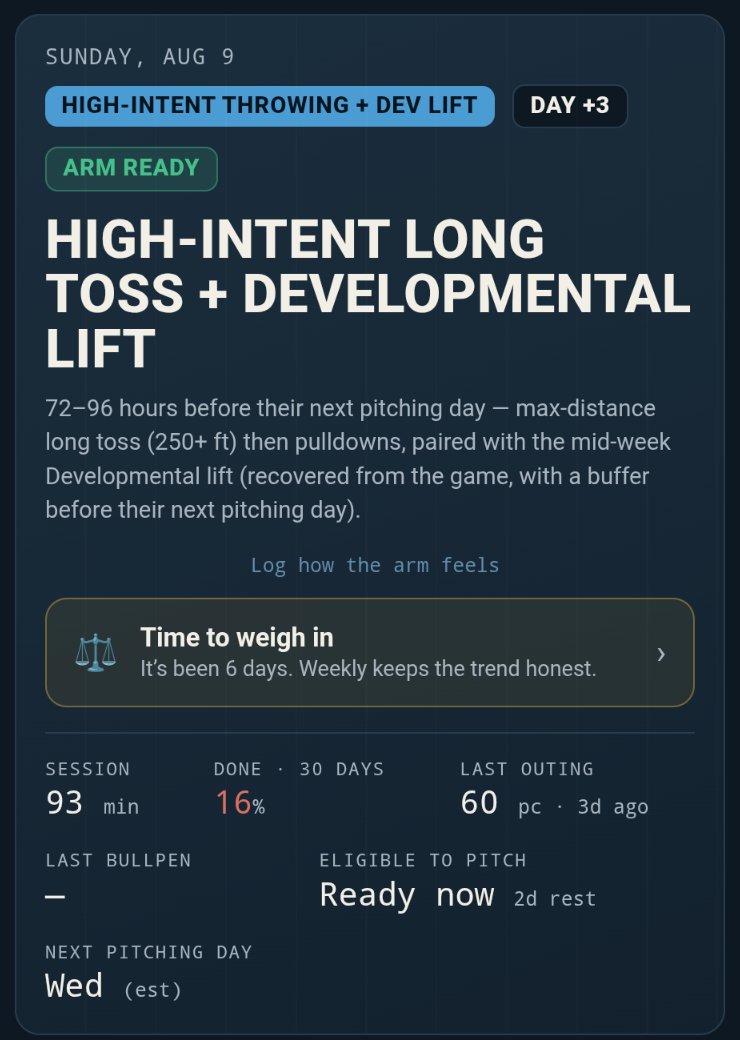
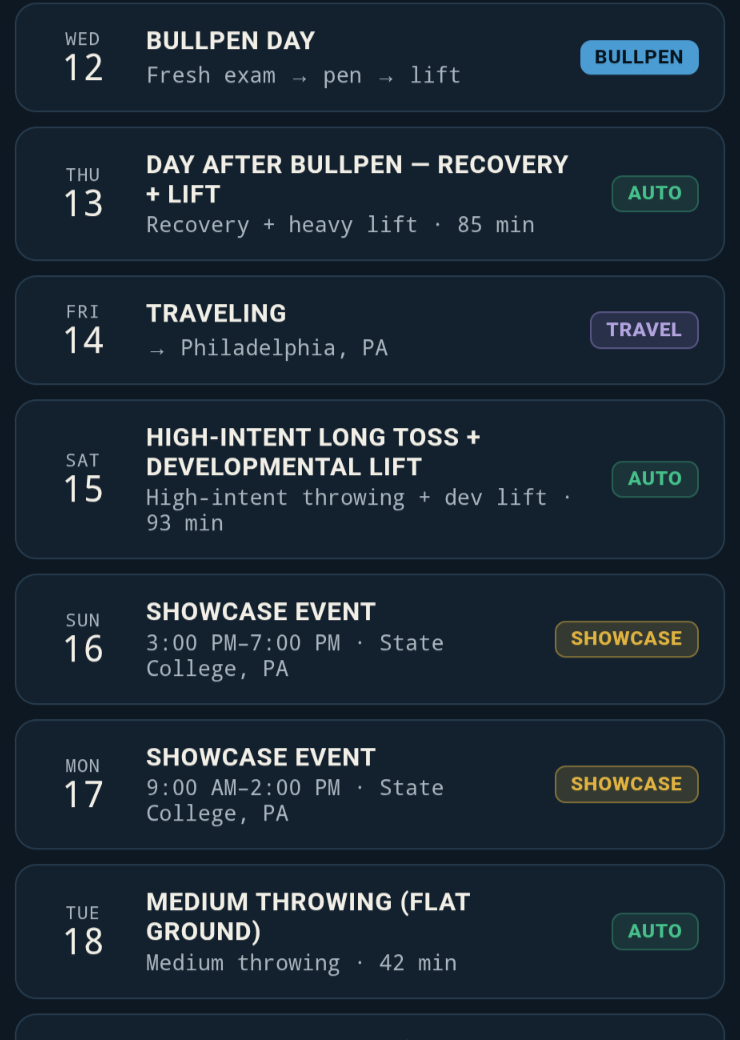
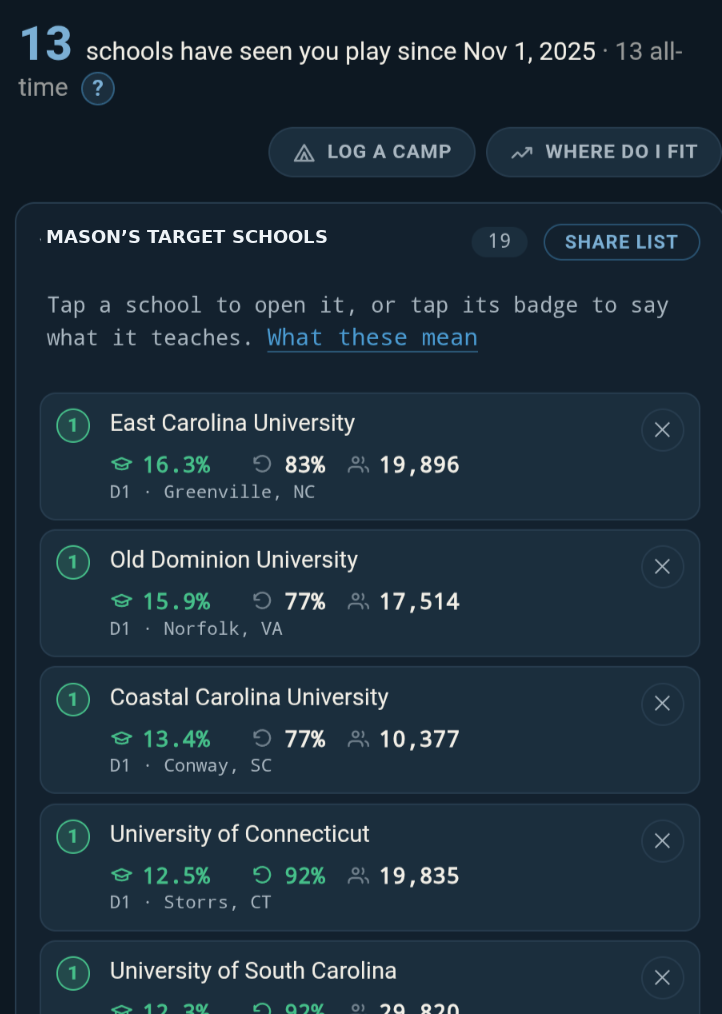
- It reads what you loggedLog a start on Friday and the weekend rebuilds itself around recovery.
- The season changes itHeavy lifts and speed out of season; maintenance and arm care in.
- Say the arm is soreThe load comes down before anybody has to ask. Tired, tight and sore are not the same.
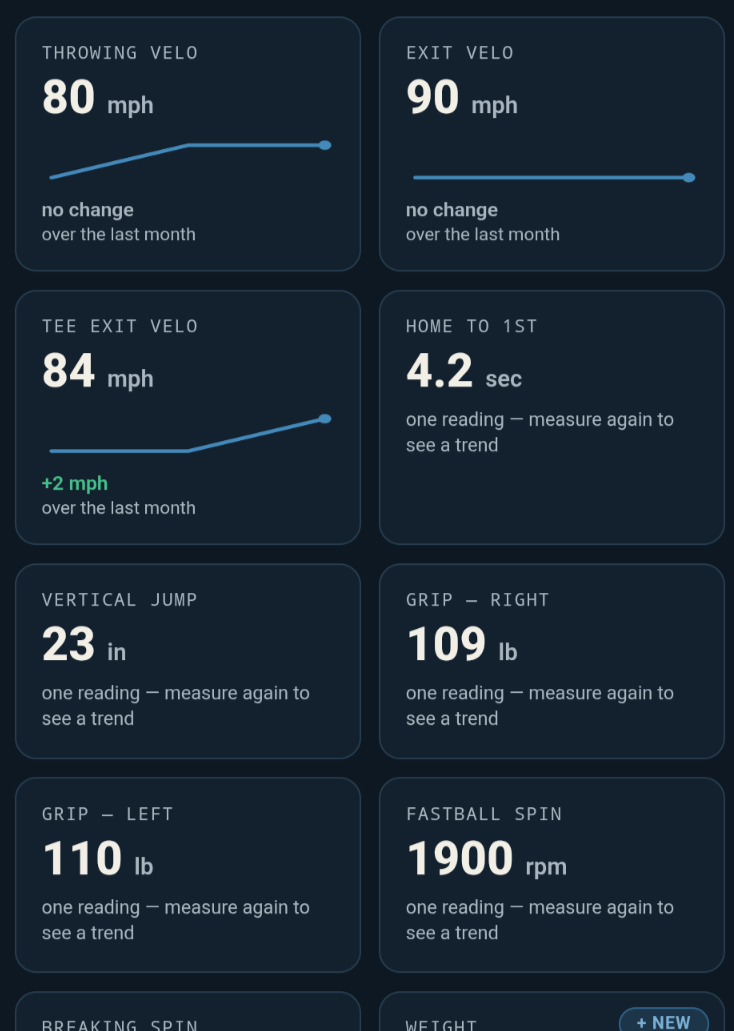
- Where you standAgainst what each level actually recruits, adjusted for how old you are now.
- CollegesResearch schools, see who has watched you, and write to coaches.
Plainly
What ADAPT isn't.
Not a lock-in
The player side works with no organization attached. Join a program later, or never.
Not a data business
We don't sell anything about anyone, and there's no advertising.
Not a coach's view of everything
Programs see training summaries and what they graded — not a family's full record.
Not a replacement for a doctor
Arm check-ins flag patterns worth looking at. They don't diagnose anything.
Not finished
It's built for real programs in real seasons, and it changes most weeks.
Running a program?
The other half of ADAPT is the work around a season — tryouts, the roster, exposure, recruiting, and closing the year properly.